Kenyan Tea: How Kenya Became the World's Biggest Black Tea Exporter
Teatentional
When people think of tea, they picture China, India or Britain. Few picture Kenya. Yet there is a good chance the tea in your breakfast blend or your tea bag has some Kenyan leaf in it. Kenya is the world's largest exporter of black tea, and it got there in little more than a hundred years.
This article is part of our series on the history of tea.
A Few Bushes in a Garden
Tea arrived in Kenya in 1903, when a British settler named G.W.L. Caine planted a few tea bushes at Limuru, in the cool highlands northwest of Nairobi. He planted them as ornamental shrubs, not as a crop. Some of those first bushes are still alive, now grown into small trees.
It soon became clear that Kenya's highlands were remarkable tea country. They sit almost on the equator, so the days are about the same length all year, but at high altitude the air stays cool. Rain is reliable and the volcanic soil is rich. Tea grows there nearly year round.
From Estates to Smallholders
Commercial tea farming began in the 1920s, when large estates were planted in Limuru and around Kericho in the western highlands. For the first decades, tea growing was controlled by colonial estates and big companies.
The great change came with small farmers. Starting in the 1950s and especially after independence in 1963, Kenya helped hundreds of thousands of families plant tea on small plots of their own land and sell their leaf to shared factories. Today, the Kenya Tea Development Agency serves more than 600,000 small growers, who produce the majority of the country's tea. Few tea industries anywhere rely so heavily on family farms.
CTC: Kenya's Signature Style
Most Kenyan tea is made by a method called CTC, short for "crush, tear, curl." Instead of rolling whole leaves, machines cut them into tiny, even pellets. The method was invented in the 1930s and spread through Africa and India in the decades that followed. CTC tea brews fast, strong and dark, which is exactly what tea bags and breakfast blends need. That is why Kenyan tea ended up in so many cups worldwide.
Kenya also makes some whole-leaf teas, along with green and white teas, and an unusual "purple tea" from a plant variety with naturally purple leaves.
The Mombasa Auction
Much of the tea from Kenya and its neighbors is sold at a weekly auction in the port city of Mombasa, one of the biggest tea auctions in the world. Buyers bid on tea from Kenya, Uganda, Rwanda, Tanzania and other East African countries, and it ships out to Pakistan, Egypt, Britain and dozens of other countries.
How Kenya Drinks Its Tea
Kenyans drink plenty of their own tea, usually as chai: black tea boiled together with milk and sugar, sometimes with ginger or other spices. It is served at breakfast, mid-morning and afternoon, a habit that came partly from British rule and partly from Indian communities in East Africa.
What Kenyan Tea Tastes Like
Kenyan black tea is bright, brisk and full bodied, with a strong reddish-brown color. It is known for a clean, slightly fruity strength that takes milk well. That is why tea blenders lean on it for breakfast teas.
How to Brew Kenyan-Style Chai
- Bring 1 cup of water and 1 cup of milk to a gentle simmer in a small pot.
- Add 2 teaspoons of strong loose leaf black tea and a few slices of fresh ginger, if you like.
- Simmer for 3 to 4 minutes, watching that it does not boil over.
- Sweeten with sugar, strain and serve hot.
A pot of milky, gingery tea like this is a fine way to warm up after a soggy Portland commute.
Our Teas for Bold Black Tea
Organic English Breakfast Tea
Bold, malty organic black tea made for milk. A great base for Kenyan-style chai.
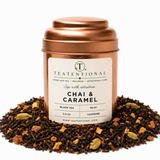
Chai Caramel Loose Leaf Tea
Black tea already blended with ginger, cinnamon, cloves, cardamom, anise and black pepper.
Hold the Coffee
For a strong morning cup: roasted mate and black tea with chocolate, cinnamon and vanilla.
Shop Organic English Breakfast Tea
Steep intentionally. Sip with intention.
Related Reading
Go back to the full History of Tea, or keep exploring with Where Does Rooibos Come From?, Where Does Chai Tea Come From? and British Tea Culture.