What Is Loose Leaf Tea? A Beginner's Guide to Your New Favorite Ritual
Teatentional
If you have ever stood in a tea aisle feeling completely overwhelmed — or wondered what makes loose leaf tea different from the tea bags you grew up with — you are in the right place. Welcome to the beginning of a beautiful ritual.
What Is Loose Leaf Tea?
Loose leaf tea is exactly what it sounds like — whole or partially whole tea leaves that are steeped directly in water rather than being packed into a small paper or mesh bag. The difference this makes in your cup is enormous.
Most standard tea bags are filled with what is called 'dust and fannings' — the smallest broken pieces of tea leaves left over after larger leaves have been sorted out. They brew quickly but often lack complexity and depth.
Loose leaf tea, on the other hand, uses full, intact leaves. When steeped, these leaves have room to expand and unfurl, releasing their full range of flavors and aromas into your water. The result is a cup that is richer, more nuanced, and far more satisfying.
Where Does Tea Come From?
All true tea — black, green, white, oolong, and pu'erh — comes from the same plant: Camellia sinensis. What makes each type different is how the leaves are processed after harvesting.
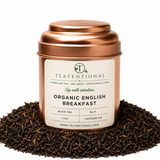
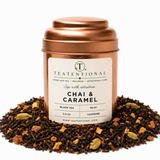
- Black Tea — Fully oxidized. Bold, rich, and robust. Think English Breakfast or Chai Caramel.
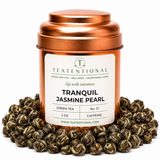
- Green Tea — Minimal oxidation. Fresh, grassy, and light. Think Jasmine Pearl or Genmaicha.
- White Tea — The least processed of all teas. Delicate, floral, and naturally sweet.
- Oolong Tea — Partially oxidized, falling between green and black. Complex and layered.
- Pu'erh Tea — Fermented and aged. Earthy, smooth, and deeply unique.
- Herbal Tea — Not technically 'true' tea as it contains no Camellia sinensis. Made from herbs, fruits, flowers, and spices. Caffeine free and incredibly diverse.
Why Switch to Loose Leaf Tea?
- Better Flavor — Full leaves mean full flavor. Once you try it, tea bags will taste flat in comparison.
- More of the Good Stuff — Whole leaves keep more of their natural oils and polyphenols than finely broken dust.
- Better Value — Many loose leaf teas can be re-steeped, making them more economical than they appear.
- Better for the Environment — No paper bags, staples, strings, or plastic packaging.
- A More Intentional Ritual — Loose leaf tea invites you to slow down. To be present. To sip with intention.
What Do You Need to Get Started?
Getting started with loose leaf tea is simpler than you think. All you really need is:
- Loose leaf tea — Start with one blend that excites you.
- An infuser or strainer — This holds the leaves while they steep and keeps them out of your cup.
- A kettle — Ideally one that lets you control temperature, as different teas need different heat levels.
- A mug or teapot — Any will do to start. A mug with a built-in infuser makes it even easier.
That is it. No complicated equipment required.
How Much Tea Do I Use?
A good starting point is 1 teaspoon of loose leaf tea per 8oz of water. From there, adjust to your taste. More leaves means a stronger, bolder cup. Less means lighter and more delicate.
Your First Cup
We recommend starting with something approachable and delicious. At Teatentional, every blend is crafted for intentional sipping — whether you are brand new to loose leaf tea or a seasoned enthusiast looking for something special. Browse the full tea collection.
Pick a blend that calls to you. Brew it slowly. Taste it mindfully. Notice the difference.
This is the beginning of your loose leaf journey. We are glad you are here.
Next, learn How to Brew the Perfect Cup or explore The 6 Types of Tea Explained.
Steep intentionally. Sip with intention. Welcome to Teatentional.