Russian Tea: Samovars, Camel Caravans and the History of Tea in Russia
Teatentional
In Russia, tea is the drink of long conversations. For generations, families gathered around a gleaming samovar, filling glass after glass of strong black tea with lemon, sugar or a spoonful of jam. Russia did not get its tea by sea like Britain did. It came overland, on the backs of camels, across thousands of miles of desert and Siberian forest.
This article is part of our series on the history of tea.
A Gift Nobody Wanted
The traditional story begins in 1638. A Russian envoy named Vasily Starkov was sent to the court of the Altyn Khan, a Mongol ruler in what is now northwestern Mongolia. When it came time to exchange gifts, the khan offered a large bundle of tea for Tsar Michael I. Starkov reportedly tried to refuse, since dried leaves seemed a poor gift next to the fine furs he had brought, but the khan insisted. The tea went to Moscow, where the court tried it and slowly came to like it.
The Tea Road
For decades tea stayed rare and expensive in Russia. Then two treaties with China opened the way. The Treaty of Nerchinsk in 1689 settled the border between the two empires, and the Treaty of Kyakhta in 1727 set up official trade at the border town of Kyakhta, south of Lake Baikal. Chinese merchants brought tea, silk and porcelain. Russian merchants brought furs.
From Kyakhta, camel caravans and later horse-drawn sleds carried bricks and chests of tea across Siberia to Moscow and St. Petersburg. The whole journey could take many months, and a full trading trip could take more than a year. Over time, tea became cheaper and spread from the nobility to merchants, townspeople and peasants. By the 1800s, it was the national drink. The caravans finally ended in the early 1900s, when the Trans-Siberian Railway made them unnecessary.
What Is Russian Caravan Tea?
Legend says that tea traveling by caravan picked up a smoky flavor from the campfires along the way. Whether or not that is true, it inspired a blend now called Russian Caravan: Chinese black tea, often with some smoky lapsang souchong and sometimes oolong. It is malty, slightly sweet and gently smoky. Lapsang souchong comes from China's Wuyi Mountains, and you can read its story in Chinese Tea Culture.
The Samovar
The samovar is the heart of Russian tea culture. It is a large metal urn, often brass or silver, that keeps water hot for hours. Early samovars held burning charcoal in a central tube that heated the water around it. The city of Tula became famous for making them in the 1700s, and a fine samovar was a family treasure.
On top of the samovar sits a small teapot holding the zavarka, a very strong tea concentrate. Each person pours a little zavarka into a glass or cup and tops it up with hot water from the samovar's tap, making it as strong or as weak as they like. Tea is often served in a glass set into a decorative metal holder with a handle, so you can drink it hot without burning your fingers. Most families today use an electric kettle, but the two-step method is the same.
How Russians Take Their Tea
- With lemon: a thin slice in the glass is classic.
- With sugar: stirred in, or a sugar cube held in the mouth while you sip.
- With jam: a small dish of fruit preserves, eaten by the spoonful between sips or stirred into the tea.
- With food: pastries, honey cake, cookies or bread are always nearby. Tea time in Russia is rarely just tea.
"Russian Tea" in America
If you grew up in the American South, "Russian tea" might mean something else entirely: a sweet, spiced drink of black tea with orange, lemon and cloves, often made from a powdered mix. It has little to do with Russia, but it is a cozy cup in its own right.
How to Make Russian-Style Tea at Home
- Make the zavarka: put 2 to 3 teaspoons of loose leaf black tea in a small teapot, add about 1 cup of boiling water and steep for 5 to 10 minutes.
- Keep a kettle of water hot nearby.
- Pour a little zavarka into each glass, about a quarter full for strong tea or less for lighter tea.
- Top up with hot water.
- Add a slice of lemon, sugar or a spoonful of jam, and serve with something sweet.
This is a perfect way to serve tea to a group on a cold, rainy Portland evening. Everyone gets their tea just the way they like it.
Our Teas for Russian-Style Tea
Organic English Breakfast Tea
A bold organic black tea that makes a strong zavarka.
Citrus Blend Tea
Black tea with bergamot, tangerine and orange. A natural match for the Russian love of tea with citrus.
Wuyi Whisper Oolong
A roasted oolong from the Wuyi Mountains, the same mountains where lapsang souchong began. Earthy, mineral and smooth.
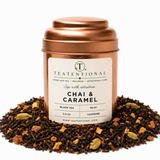
Chai Caramel Loose Leaf Tea
If you love the spiced Southern-style "Russian tea," this black tea with cinnamon, cloves and ginger is a natural fit.
Shop Organic English Breakfast Tea
Steep intentionally. Sip with intention.
Related Reading
Go back to the full History of Tea, or keep exploring with Turkish Tea, Chinese Tea Culture and British Tea Culture.